
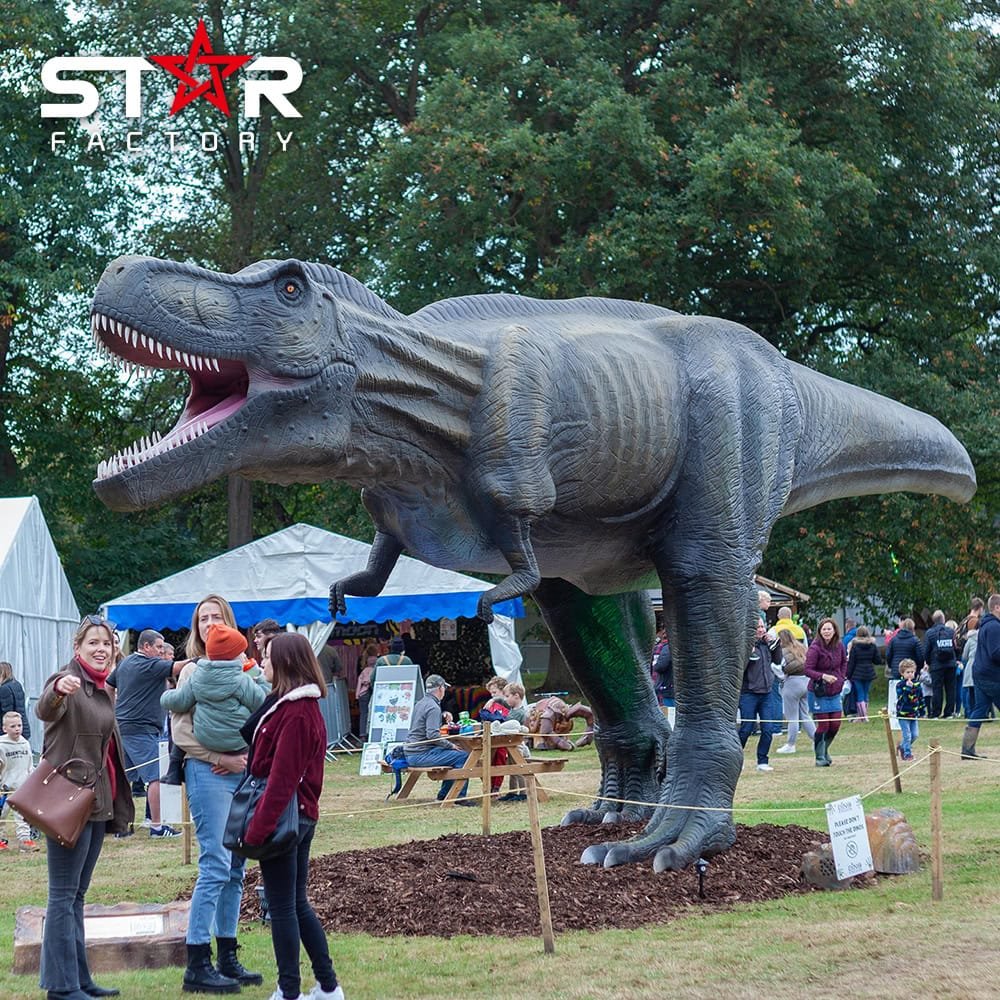
A Custom T-Rex Animatronic for Public Attractions
A T-Rex animatronic is a made-to-order dinosaur figure with programmed movement. Parks, museums, science centres, exhibitions and other public venues can specify its size, sculpted finish, sound and moving features for their site. We also plan how the figure will be packed, installed and accessed for maintenance.
The most effective movement depends on where visitors will see the dinosaur. A head turn or opening jaw may have more impact than several subtle motions elsewhere. Viewing distance, operating hours, power, shipping access and installation space all shape the final design.
What can a giant animatronic T-Rex do? Options may include a turning head, opening jaw, blinking eyes, moving forelimbs, selected body or tail motion and synchronized sound. The approved design determines which features are included, how they are controlled and how often the figure will operate.
Is a Moving T-Rex the Right Choice?
A single T-Rex works well as a park landmark, exhibition centrepiece or memorable encounter along a visitor route. If the project needs several dinosaurs or other creatures, start with our custom animatronics service. For an illuminated night trail without realistic movement, compare our dinosaur lantern displays.
Choose Movements Visitors Will Notice
More motors do not automatically make a better attraction. We first look at the dinosaur’s posture, the visitor approach and the moments when movement will be most visible. The mechanism is then developed around the approved size, range of motion, operating cycle and service access.
Head, jaw and eyes
An opening jaw, turning head or blinking eyes can give the T-Rex a clear expression. Agree on the viewing side, speed, movement range, pause time and visitor clearance before the mechanism is built.
Body, forelimbs and tail
Selected body, arm or tail movement can strengthen the silhouette, but it needs enough structural support, transport space and maintenance access. It should also fit the site’s visitor safety plan.
Sound and show timing
A roar can be timed with the jaw or head movement. The venue should decide the volume, cycle frequency, trigger method, controller location and manual override before production.
Confirm the final package: these are possible features, not a standard set included in every figure. The approved drawings and quotation should list the moving points, controls, sound, lighting if needed, access panels, operating cycle and spare parts.
Design the Dinosaur for How Visitors Will See It
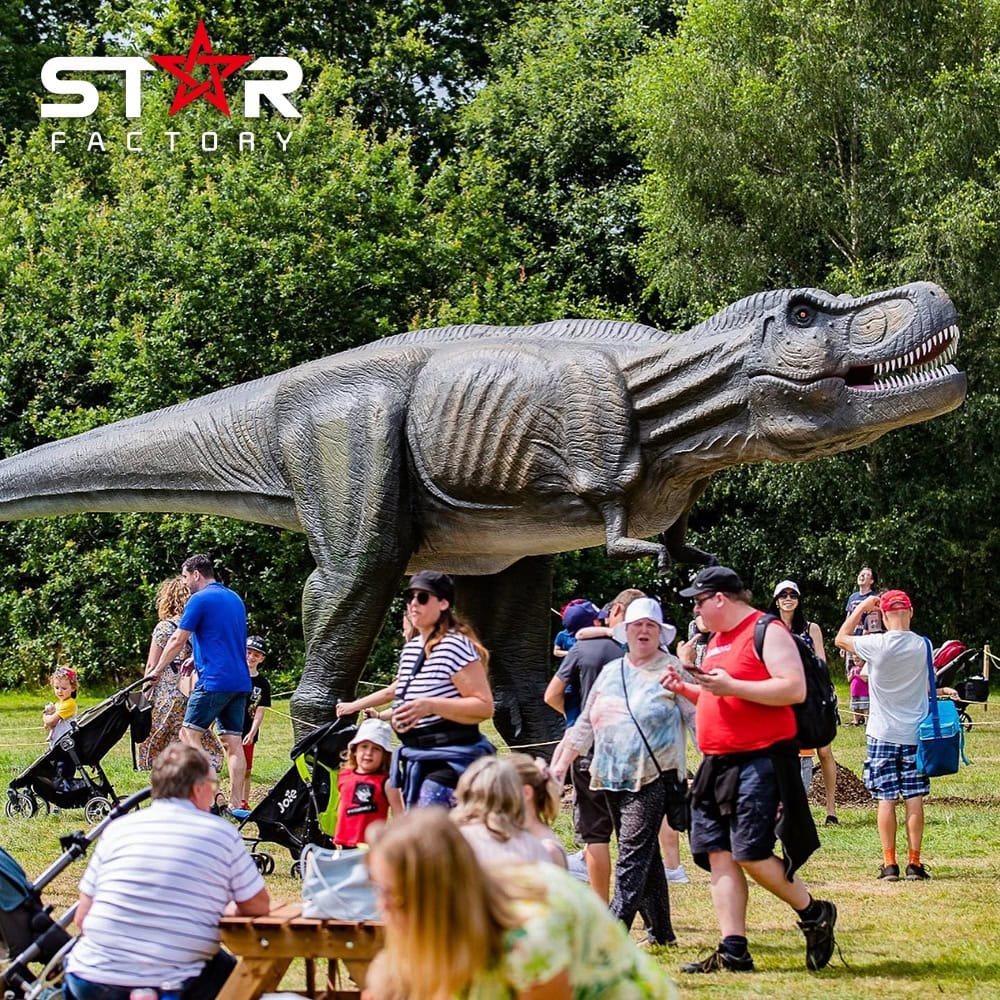
A figure seen from across a park needs a strong outline and visible movement. A museum or photo-area figure will be judged at closer range, where the eyes, teeth, skin texture and paint matter more. The viewing distance also affects the pose, base and visitor barrier.
A clear silhouette from the approach
For an outdoor landmark, plan the height, body angle and head direction around the main visitor approach. The jaw, base, scenery and lighting should reinforce that view.
Detail that stands up to a closer look
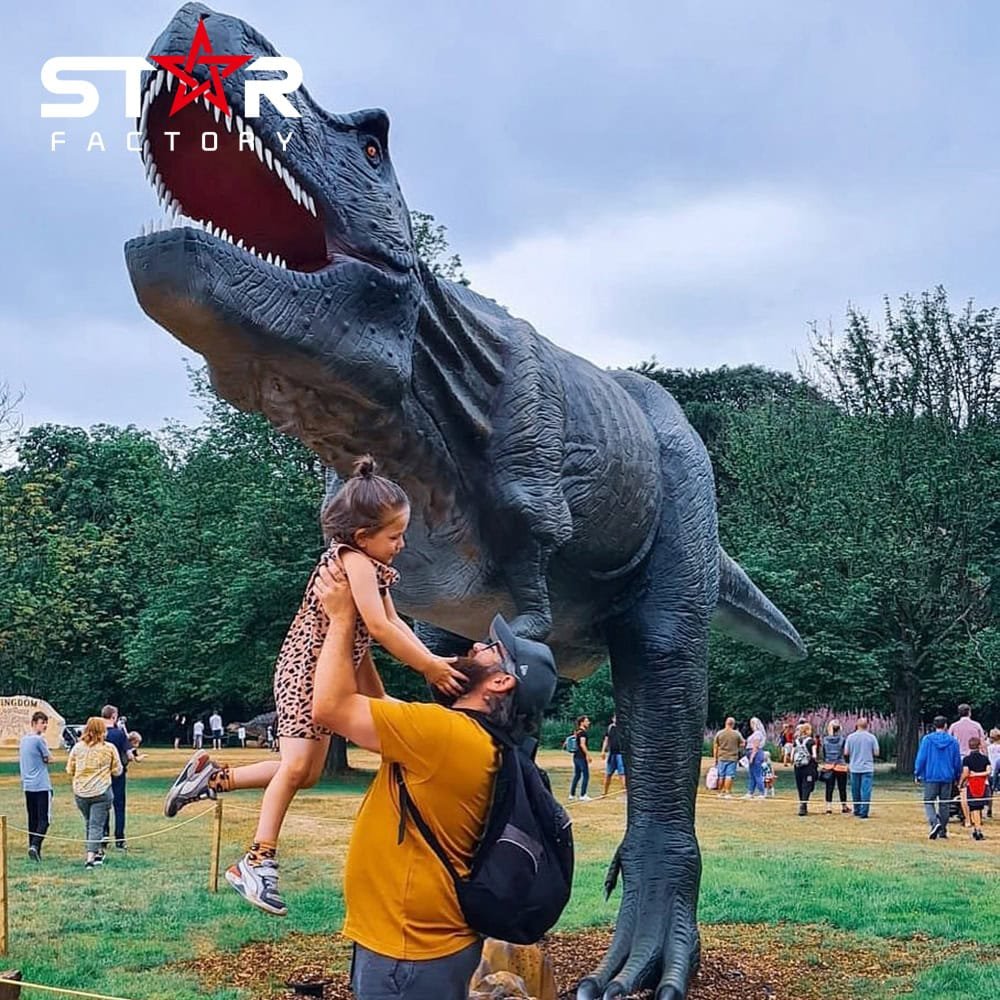
In museums, queues and photo areas, visitors can see the eyes, teeth, skin and paint up close. Review these details alongside viewing height, circulation, barriers and the finish of the base.
Plan the scene after dark
If the attraction runs at night, consider pathway and landscape lighting, nearby lanterns, power zones and cable routes as part of the same scene.
Where a T-Rex Animatronic Fits
An entrance landmark or route encounter
A T-Rex can mark an entrance, reveal itself along a trail or anchor a prehistoric zone. Share the route width, viewing direction, barrier position, operating hours and service access so the encounter fits the site.
A moving exhibition figure
Agree on scale, scientific interpretation, sound level and show timing with the exhibition team. Floor loading, visitor distance, delivery access and staff operation also need review.
A feature that can travel and be reassembled
For touring displays, plan the section labels, packing, handling equipment, access panels and assembly order for repeated moves. Agree on what each local crew will handle.
A public photo destination
For a mall or plaza, choose the size only after checking ceiling or outdoor clearance, crowd flow, queues, noise, floor or ground conditions, security and maintenance access.
An outdoor encounter planned for the site
Wind, rain, drainage, anchoring, power and visitor separation all need a site-specific plan. The venue should also confirm its inspection access, operating period and local requirements.
Build a wider prehistoric route
If the project includes fossils, eggs, volcanoes, plants, illuminated scenery and several dinosaur species, see our prehistoric display planning page for the full visitor route.
Choose the Build After Defining the Motion and Site
The figure typically combines a supporting structure and movement mechanisms with sculpted forms, a textured surface, paint, wiring, controls and sound equipment. Materials and protection are selected for the approved appearance, motion, handling, climate and maintenance requirements.
Frame, mechanisms and access
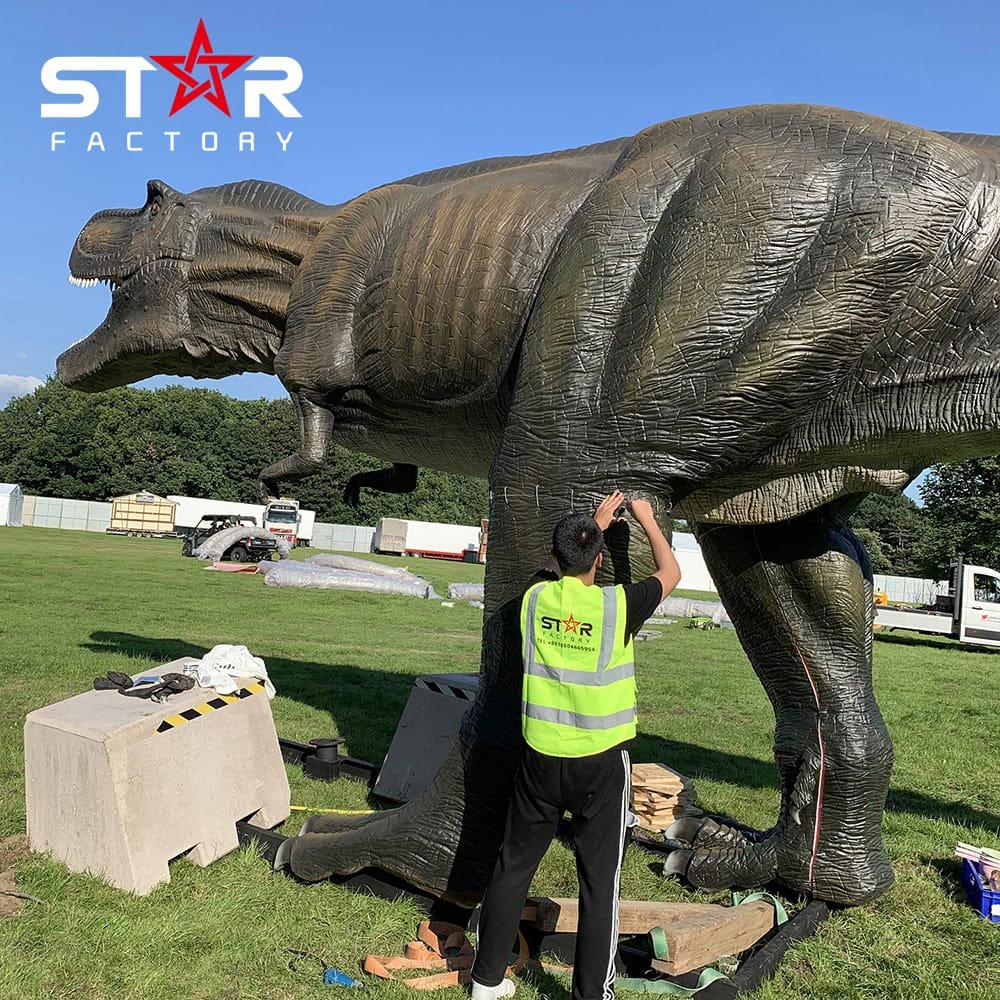
Plan the base, moving joints, motor positions, section connections, controller, wiring and service openings before closing the surface. The internal structure must also accommodate the transport split.
Shape, texture and paint
Choose the surface finish for the intended realism, movement, viewing distance, cleaning and handling. Outdoor exposure and approved reference images also matter; one material is not right for every figure.
Operating and service plan
Before delivery, agree on operating hours, start and stop procedures, inspection points, access for repairs, replacement parts and who the local staff should contact for support.
For outdoor sites: suitability depends on the specified surface and electrical protection, drainage, anchoring, wind exposure and inspection plan. Local electrical and structural requirements must be checked for the actual venue; an “outdoor” label alone does not establish that the whole figure is weatherproof.
Start With the Space, Access and Power Available
Measure the usable space
Send the available width, height and depth, plus the main viewing distance. Mark the visitor approach, photo point, barriers, queue, exit and clearance needed for servicing.
Show how the figure will reach the site
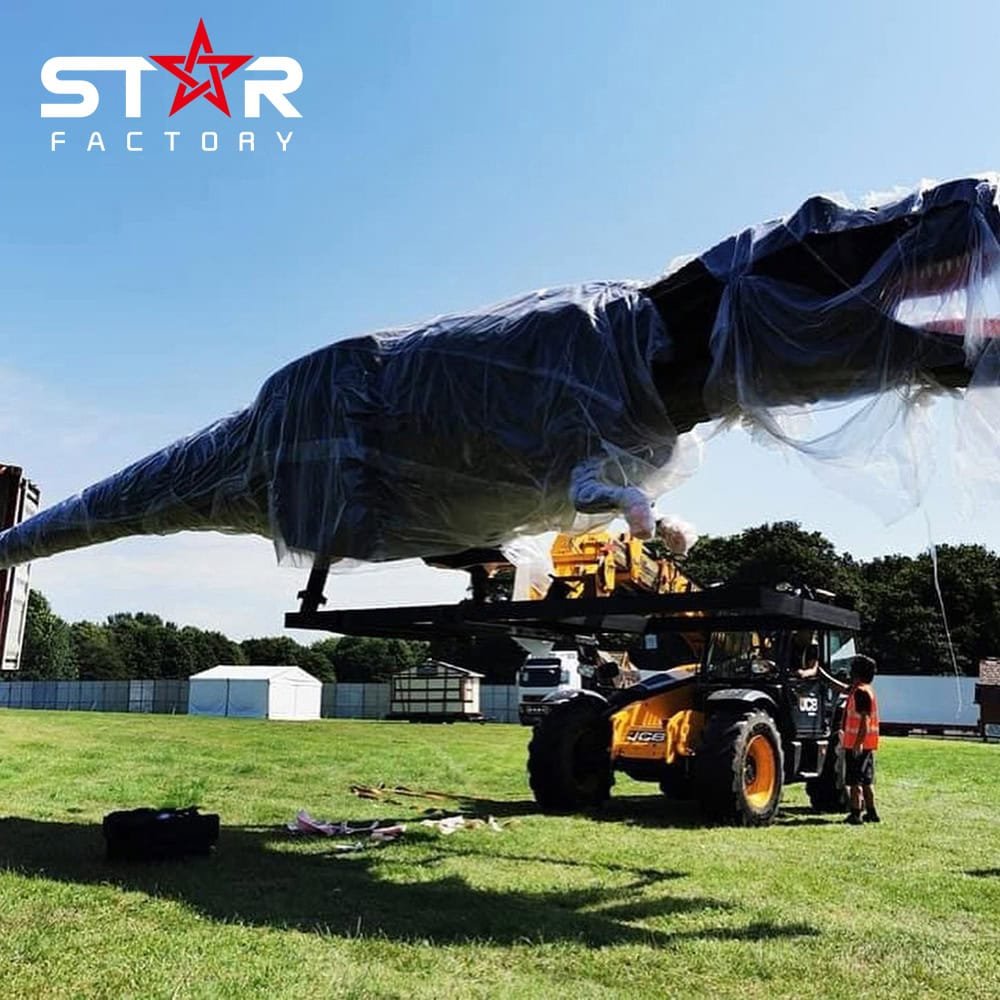
Share the ground or floor type, fixing restrictions and drainage conditions. Include the unloading route, gate or doorway sizes, lifting equipment, installation window and likely wind exposure.
Confirm power and daily operation
Identify the available voltage, power and cable locations, controller position and sound restrictions. Agree on the operating cycle, manual override, local electrical work and who will maintain the figure.
How a T-Rex Project Moves From Brief to Installation
- 01 · BriefDefine the visitor experience
Share the venue, site dimensions, visitor route, desired size and motion, opening date and destination.
- 02 · Visual designAgree on the figure’s look
Review the T-Rex’s posture, proportions, expression, skin, colour, viewing side, base and surrounding scene.
- 03 · EngineeringPlan movement and structure
Specify moving points, range, cycle, internal support, access, transport sections, controls, sound, power, fixing and visitor clearance.
- 04 · ProductionBuild and test the approved functions
Fabricate the structure and mechanisms, finish the sculpted surface, assemble the figure and test its agreed movements and controls.
- 05 · PackingProtect and identify the sections
Plan section labels, protective packing, loading order, photographs, shipping documents and any agreed spare parts.
- 06 · HandoffPrepare the site team
Provide the agreed assembly drawings, wiring notes, test steps and remote or on-site installation support.
What Shapes the Cost of a Custom T-Rex?
A photograph or total length is not enough for a reliable price. The figure’s size and finish, number of moving features, sound and control system, outdoor requirements, shipping sections, delivery and installation support all affect the quote. Our animatronics cost guide explains these factors in more detail.
- Desired posture, expression, length, height and main viewing side.
- Which head, jaw, eye, neck, body, forelimb or tail movements you need.
- Finish and colour references, sound, lighting, triggers and show timing.
- Daily operating hours, visitor barrier and maintenance expectations.
- Venue, city, available footprint, ground conditions and indoor or outdoor use.
- Power, controller position, cable route, drainage, wind and local requirements.
- Opening date, destination, transport and unloading limits, and lifting equipment.
- Local crew, installation responsibility, storage and plans for reuse.
Planning More Than One Dinosaur?
See custom animatronics for a group of moving figures, dinosaur lanterns for illuminated night scenes and our prehistoric route guide for a complete visitor trail. The cost guide explains budget factors, while our factory guide shows what to check before placing an overseas order.
Questions About a Custom T-Rex
What is a T-Rex animatronic?
A T-Rex animatronic is a custom-built dinosaur figure with programmed movement. Its size, moving features, sound, finish, controls and transport sections are planned for the venue and approved brief.
What movements can be added to a giant T-Rex?
Possible features include head turning, jaw opening, eye blinking, neck, body or forelimb movement, and selected tail motion. They are options rather than a standard package. The approved movement plan depends on the model size, viewing angle, operating cycle, visitor clearance and maintenance access.
Can a T-Rex animatronic be used outdoors?
A T-Rex can be specified for an outdoor site after the wind exposure, anchoring, drainage, electrical protection, visitor clearance and maintenance plan have been reviewed with the local team. Outdoor use does not mean the complete figure is universally weatherproof.
Which materials are used for a realistic animatronic dinosaur?
The build typically combines a supporting frame and movement mechanisms with sculpted forms, a textured finish, paint, wiring and controls. Materials and protection are chosen for the approved appearance, motion, handling, climate, maintenance and local requirements.
How large can a custom T-Rex animatronic be?
There is no single standard size. Practical dimensions depend on the venue footprint, viewing distance, shipping and access limits, movement range, fixing plan and visitor clearance. Send the usable width, height and depth rather than choosing from a photograph.
What information is needed for a T-Rex animatronic quotation?
Tell us the venue and city, available space, intended size and movements, viewing distance, sound and power requirements, operating hours, indoor or outdoor conditions, opening date, shipping destination and installation responsibility. Site plans, photographs and reference images help us assess the brief.
Tell Us About Your T-Rex Project
Send the venue, intended size and movements, visitor viewing distance, site conditions, opening date and destination. Plans or photographs will help us assess transport and installation access.
Email: info@starslantern.com · WhatsApp: +86 186 0460 5954


